

Play video
Video
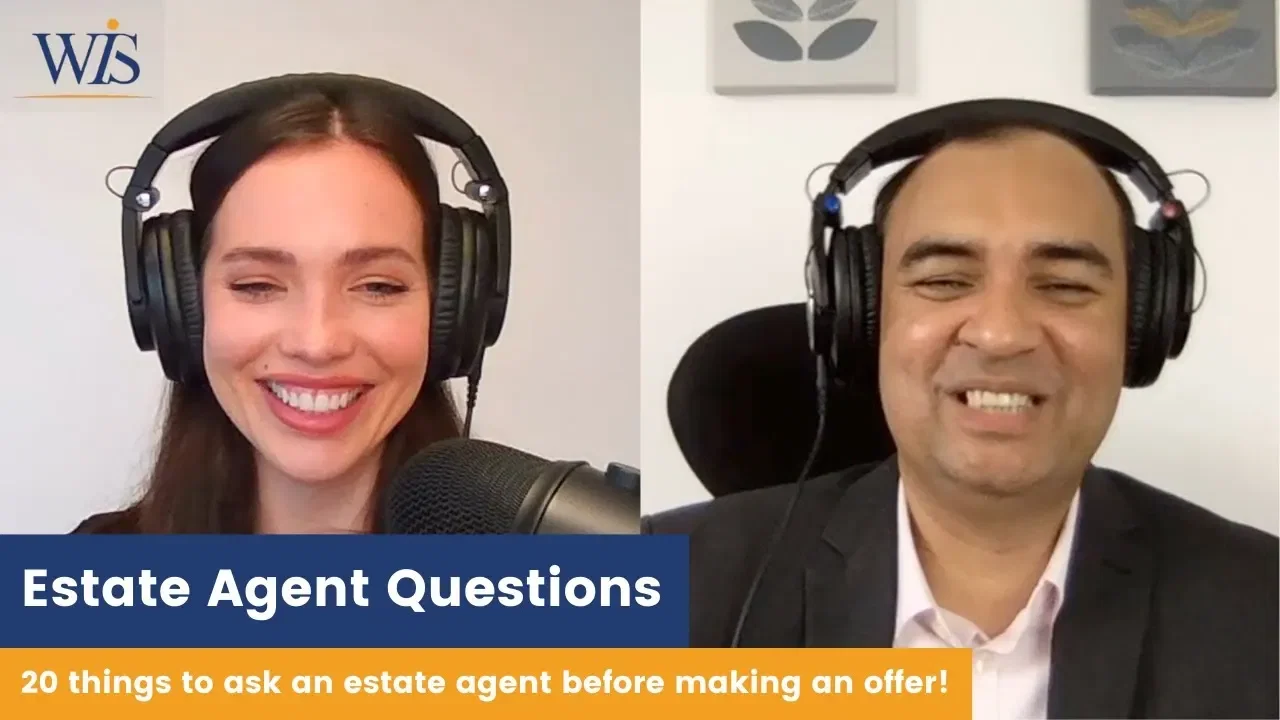
20 Things To Ask An Estate Agent BEFORE Making An Offer | First-time Buyer
Before making an offer on a property ask these 20 questions. WIS Mortgages helps first-time buyers go into negotiations fully informed.
Video Breakdown
0:00 – introduction
0:40 – Let’s talk money & mortgages
1:25 – Why are they selling the property?
2:13 – What is staying in the sale?
2:54 – When was the boiler last replaced?
4:12 – Was there any rewiring done?
4:44 – Has any structural work been carried out on the property
5:25 – How long have they had the property on the market for?
6:02 – How old is the property?
7:01 – How long has the landlord lived in the property?
7:22 – Do they have issues with the neighbors?
8:22 – Any serious issues at the property?
9:04 – What is the minimum price the seller may accept?
9:58 – What other offers have been made?
11:03 – Is the seller in a chaina and when will they move out#
12:08 – Has any worker been carried out on the property?
12:51 – Is this a listed property?
13:51 – Council tax band
14:30 – What are the bills like?
15:21 – What is the service charge and ground rent?
16:20 – How long is left on the lease?
Video Transcript
Podcast Hosts:
Gemma (Host) Ifthikhar (Ifthi) – Accountant, Mortgage Advisor, and Founding Director at WIS
Speak to an advisor
Introduction
Gemma: Today we’re covering 20 essential questions to ask an estate agent or seller before purchasing a property. Especially important for first-time buyers to avoid surprises.
Q&A Discussion
Q1: Why are they selling the property? Ifthi: Crucial to understand any underlying reasons for selling. Sellers may not disclose certain issues; asking helps you avoid future problems.
Q2: What is staying in the sale? Ifthi: Clarify what fixtures or appliances are included (e.g., chandeliers, curtain poles, washing machines). Don’t assume anything stays—include desired items in your offer.
Q3: When was the boiler last replaced? Ifthi: Important for older properties. Older boilers are less efficient and may require replacement, which can cost thousands of pounds.
Q4: When was the boiler last serviced? Ifthi: Regular servicing ensures proper function and efficiency. Can be part of negotiations—ask the seller to service it before moving.
Q5: Has any electrical wiring been done? Ifthi: For older properties, wiring could be outdated (e.g., 1940s systems). Replacement can be expensive; consider a survey for verification.
Q6: Has any structural work been carried out on the property? Ifthi: Important to check for planning permission and warranties. Unpermitted structural changes could become your responsibility.
Q7: How long has the property been on the market? Ifthi: Helps with price negotiation. Longer time on market may indicate overpricing, giving room to negotiate.
Q8: How old is the property? Ifthi: Older properties may have issues like old boilers, wiring, or structural wear. Helps with budgeting for potential repairs. Consider a full structural survey if unsure.
Q9: How long has the landlord lived in the property? Ifthi: Short occupancy may indicate hidden issues with the property.
Q10: Are there issues with the neighbors? Ifthi: Essential to know before moving in. Problematic neighbors can significantly affect living conditions.
Q11: Are there any serious issues with the property? Ifthi: Examples: leaking roofs, faulty double glazing. Always ask directly—estate agents or landlords are obliged to answer.
Q12: What is the minimum price the seller would accept? Ifthi: Helps in negotiation. Estate agents may hint at flexibility—always worth asking.
Q13: What other offers have been made? Ifthi: Indicates competition and bargaining power. Fewer offers could allow price negotiation; multiple offers may require offering asking price.
Q14: Is the seller in a chain and when will they move out? Ifthi: Chain delays can affect completion timeline. Sellers in a rush may offer bargains; slow chains may delay your move.
Q15: Has any work been carried out on the property? Ifthi: Check warranties for new installations (e.g., ovens, wardrobes, extensions). Can be part of negotiation.
Q16: Is this a listed property? Ifthi: Listed properties have restrictions on structural changes. Understand limitations and potential extra costs before purchase.
Q17: What is the council tax band? Ifthi: Important for budgeting; council tax can vary significantly by area. Check online government resources to calculate expected bills.
Q18: What are the utility bills like? Ifthi: Ask current owners about gas, electricity, and other bills. Gives insight into property efficiency and potential future costs.
Q19: What are the service charge and ground rent? Ifthi: Common with apartments and some new builds. Service charges can be high, especially in city apartments; check year-on-year changes. Ground rent is generally lower but still a recurring cost.
Q20: How long is left on the lease? Ifthi: Short leases make mortgages difficult to obtain. Lease extensions can be costly; understand the costs before committing.
Closing Remarks
Gemma: These questions may not all apply to every buyer or property. Always consult an advisor to ensure they are relevant for your situation. Reminder: Mortgages are secured against your home or property and may be repossessed if repayments are missed.
 10 Things You Need To Budget For When Purchasing A Property | First-time Buyer Help
 Parents On The mortgage? | First-time Buyer Options
 How To Improve Your Chances Of Getting A Mortgage In 2026 – First Time Buyer Tips UK
 First-Time buyer process decoded: UK Mortgage
 First Time Buyer Mistakes | Top Ten Tips For First Time Buyers Applying For A Mortgage
 Borrow 5.5 x Income First-Time Buyer Mortgages | NEW SCHEME
 Getting A Mortgage Quickly | Advice From A Mortgage Broker | First Time Buyer
 UK Budget 2026 Changes for First-Time Buyers | New Mortgage Schemes & Deposit Options Explained
Want to see real lender options?
Answer a few quick questions without leaving this page.
Talk it through with an advisor
Your home may be repossessed if you do not keep up repayments on your mortgage.