

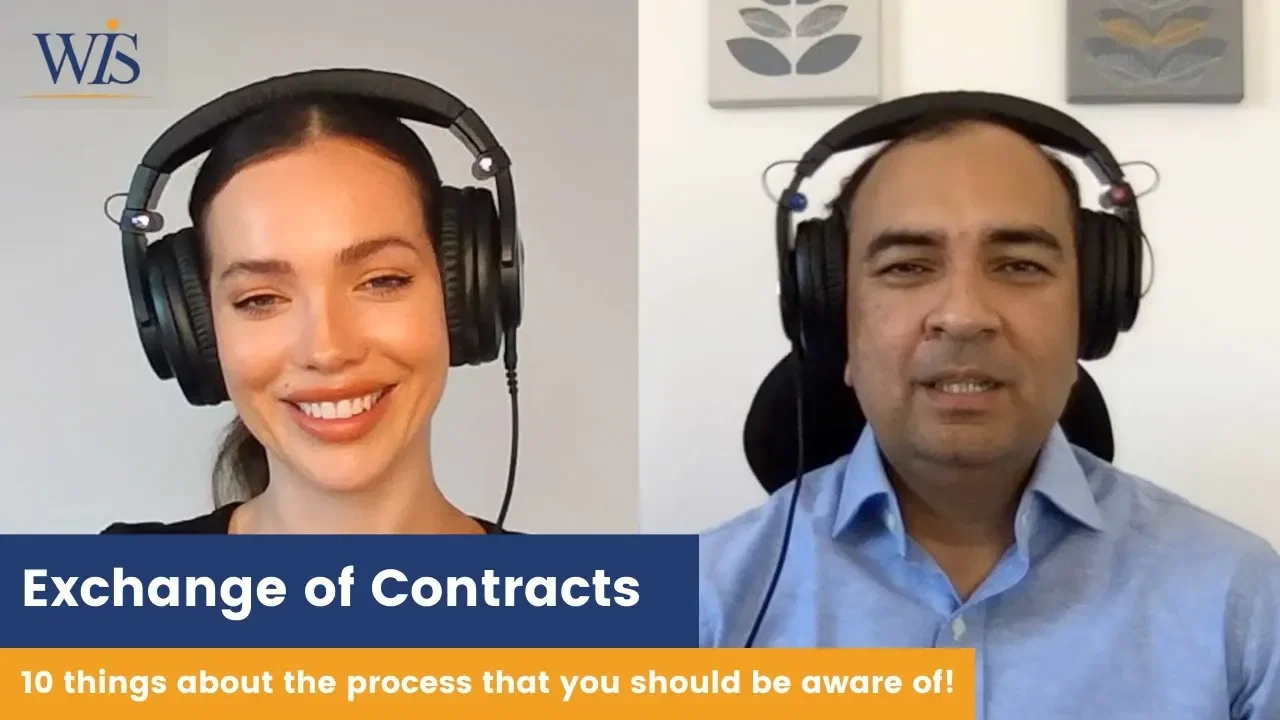
Play video
Video
Exchanging Contracts – Everything You NEED To Know
WIS Mortgages explains the exchange of contracts what happens what to check and why this is the most critical stage of buying a property.
Video Breakdown
0:00 – introduction
1:10 – What does exchange of contract mean
1:59 – Are you the legal owner
2:19 – Exchange vs Completion
4:13 – Solicitors pack
6:53 – List of items
8:22 – Home insurance
10:46 – Completion
11:26 – Minimum time gap
13:05 – Ensure everything is in order
14:22 – Talk to the movers
15:20 – Know how the controls work
16:39 – Inform bill providers
Video Transcript
Podcast Hosts:
Gemma (Host) Ifthikhar (Ifthi) – Accountant, Mortgage Advisor, and Founding Director at WIS
Introduction
Gemma: Today we’re talking about exchange of contracts in the property buying process, what it means, and the difference between exchange and completion. We’ll also cover 10 things to consider before exchanging contracts.
Speak to an advisor
Q&A Discussion
Q1: What does “exchange of contracts” mean? Ifthi: One of the biggest milestones in buying a property – often called the “point of no return.” You provide your deposit to the solicitor (commonly 10% of the purchase price). Solicitors agree on a completion date, the day the property legally changes hands. For existing properties, you know exactly when you’ll get the keys. For new builds, it may take months.
Q2: Are you the legal owner at exchange? Ifthi: No, you are not the legal owner at exchange. Your name is not yet on the Land Registry. You do have responsibilities from the point of exchange.
Q3: What are the differences between exchange and completion? Ifthi: At Exchange: Seller signs a TR1 transfer form and submits it to their solicitor. Buyer pays their deposit. Completion date is agreed upon. Solicitors confirm all mortgage and documentation are in order. At Completion: Buyer’s solicitor transfers funds to the seller. Seller’s solicitor confirms receipt. Estate agent hands over the keys to the buyer. Exchange = agreement in principle; Completion = day you get the keys.
Q4: 10 Things to Consider Before Exchange
1. Review the solicitor’s pack Contains search results (local searches, drainage, flood risk) and findings. Includes easements (e.g., allowing someone to walk through your garden) and restrictive covenants (e.g., limitations on building structures, parking restrictions). Carefully review and consult your solicitor if unsure.
2. Verify the list of items from the seller Ensure items like curtain poles, blinds, taps, wallpaper match what you agreed on. Solicitors send a detailed room-by-room list – check everything is correct.
3. Arrange home insurance Insurance must be valid from the point of exchange, not completion. Mandatory for most mortgage offers, especially for houses.
4. Arrange life insurance Protects against losing the main income earner before completion. Ensures obligations can be met and prevents loss of deposit or additional claims.
5. Confirm you have funds to complete Include stamp duty and solicitor fees. Ensure you can meet all obligations; otherwise, you risk paying damages.
6. Agree on a minimum gap between exchange and completion Shorter gap reduces risk if circumstances change (e.g., job loss, death). Ideally, exchange and completion on the same day, but practical constraints may prevent this.
7. Inspect the property before exchange Check all agreed items are present and in good condition. Identify issues (e.g., damaged walls) before committing. Avoid unexpected costs or disputes later.
8. Arrange movers in advance Coordinate with the chain of buyers and sellers. Ensure availability and avoid last-minute high charges. Allow ample time for packing and moving.
9. Understand how controls work in the house Learn operation of boilers, gas cookers, heating systems. Ask the seller to leave manuals for appliances and systems.
10. Inform all bill providers of your move Notify banks, insurance, mobile providers, HMRC, pension providers, etc. Arrange mail redirection for missed letters (usually 3–6 months).
Closing Remarks
Gemma: Exchange of contracts and completion are major milestones. Proper planning, inspection, insurance, and communication are crucial. Reminder: These points may not apply to everyone. Always consult a qualified advisor. A mortgage is secured against your home or property and may be repossessed if repayments are missed.
 EVERYTHING you need to know about buying a new build home in the UK
 Mortgage Rapid Fire: Everything Foreign Nationals Need to Know in Minutes
 Houses Vs Flats 7 Things You Need To Know Before Buying
 Income Protection Insurance | What You Need To Know | Help
 Life Insurance & Mortgages | What You Need To Know | Help
 Purchasing A Property In Joint Names | What You NEED To Know
 Here’s what you need to know about Fixed deals: UK Mortgages
 Remortgaging To Raise Extra Cash | What You Need To Know UK
Want to see real lender options?
Answer a few quick questions without leaving this page.
Talk it through with an advisor
Your home may be repossessed if you do not keep up repayments on your mortgage.