


Play video
Video
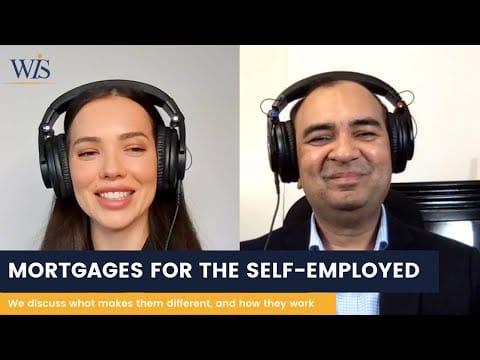
Getting A Mortgage As Self-Employed | Mortgage Broker Advice
Self-employed and applying for a mortgage? explains how lenders assess self-employed income and how to give your application the best chance.
Video Breakdown
0:00 – Introduction
1:05 – Selfemployed v Employed
1:55 – How does this difference affect your mortgage
3:06 – What documents do you need
5:24 – How long do you have to be selfemployed
6:21 – Special underwriting requirements
7:05 – Do you need an accountant
8:13 – How do lenders assess affordability
9:19 – What deposit size do you need
10:20 – How long will it take
11:23 – How will it affect my chances
Video Transcript
Podcast Hosts:
Gemma – Host Ifthiika (Ifthi) – Accountant and Mortgage Broker
Speak to an advisor
Introduction
Gemma: Today, we’re talking about how mortgages work for self-employed individuals. Ifthi has over 10 years of experience helping self-employed people get mortgages and will share his tips.
Q&A Discussion
Q1: What Is the Difference Between Self-Employed and Employed? Ifthi: Employee: Receives a salary via pay slips, straightforward proof of income, consistent, verified with HMRC via P60. Self-Employed: Works for their own business: Sole proprietor Partner in a business Company director (banks classify as self-employed) Self-employed individuals may draw a small salary but most income comes from business profits. Income is inconsistent and seasonal, which makes mortgage assessment more complex.
Q2: How Does This Affect Getting a Mortgage? Ifthi: Employees: Easy verification via pay slips and P60s, predictable income, straightforward bank checks. Self-Employed: Income varies, may have high and low months, or an inconsistent year, requiring more scrutiny by lenders.
Q3: What Documents Do Self-Employed People Need for a Mortgage? Ifthi: SA302: Equivalent to an employee’s P60; shows income and tax due for the last financial year. Tax Overview: Confirms that taxes as per SA302 have been paid. Company Accounts (optional but recommended): Some company directors have additional income not reflected in SA302 Banks may assess profits from accounts Contractor Clients: Must also provide contracts to prove income.
Q4: How Long Do You Need to Be Self-Employed Before Applying? Ifthi: Generally, two years of self-employment is required. Some banks accept one year of accounts, usually via bespoke underwriting. Always consult an advisor before applying to avoid rejection.
Q5: Do Lenders Have Special Requirements for Self-Employed Applicants? Ifthi: Lenders typically require: SA302s Tax overviews Sometimes company accounts Occasionally recent bank statements to verify current income levels
Q6: Do You Need an Accountant to Get a Mortgage? Ifthi: Technically: No, anyone can submit accounts to Companies House/HMRC. Practically: Yes, banks often require accountant-signed accounts. Bookkeepers alone usually do not meet bank requirements for mortgage applications.
Q7: How Do Lenders Assess Affordability for Self-Employed? Ifthi: Similar to employees: banks look at income versus expenses and commitments. Factors considered: Loans, credit cards, large balances Credit score Typically, lenders may offer up to 4.5x annual income if conditions are met.
Q8: What Deposit Size Is Needed for Self-Employed Buyers? Ifthi: Standard schemes available: Help to Buy – 5% deposit Government-backed 5% deposit Banks offering 5% deposit mortgages Better rates usually start with 10% deposit, as smaller deposits are considered higher risk.
Q9: How Long Does It Take to Get a Mortgage for Self-Employed? Ifthi: Employee applications: faster due to easy income verification. Self-employed: may take extra 2 weeks for additional checks. Banks may verify income from previous tax returns and need more time for current year assessment.
Q10: How Does Furlough or Recent Unemployment Affect Applications? Ifthi: Lenders typically do not like recent furlough or unemployment. Some government grants during COVID boosted self-employed income, causing lenders to adjust assessments. Banks may ignore unusual income years and focus on prior consistent years. Always consult an advisor, as treatment varies by lender.
Closing Remarks
Gemma: These tips may not apply to everyone; always speak to an advisor if unsure. Reminder: A mortgage is secured against your home or property and may be repossessed if repayments are missed.
 UK Mortgage Advice 2026 | First-Time Buyers, Remortgages & Self-Employed Explained
 Getting A Mortgage Quickly | Advice From A Mortgage Broker | First Time Buyer
 Gifted Deposits | What Others Aren’t Telling You… | Real Mortgage Broker Advice
 First Time Buyers Getting A Mortgage | Help Is Here | UK Mortgage Advice
 Saving Tax As Self-employed and/ or a Company Director | Things you SHOULD know…
 Mortgages for Self-Employed | First-Time Buyers | Mortgage Help
 How WIS Helps Self-Employed Mortgage Brokers Grow Faster (UK)
 Moving Property to a LTD Company | Accountant & Mortgage Advice
Want to see real lender options?
Answer a few quick questions without leaving this page.
Talk it through with an advisor
Your home may be repossessed if you do not keep up repayments on your mortgage.